Cronometer vs MyFitnessPal: Honest Coach Comparison (2026)
Cronometer hits 30 of 30 foods within 5% of USDA reference values. MyFitnessPal hits 11. But MyFitnessPal has 14 million food entries vs Cronometer's 1.2 million. Which one should you recommend to your clients, and which one fits which kind of client? Honest answer below.

The short answer for coaches
Recommend Cronometer to athletes, biohackers, and clients with micronutrient goals or deficiencies. Recommend MyFitnessPal to casual habit-building clients who care about consistency over precision. If you want to actually generate meal plans for clients, neither does that, you'd pair either tracker with a meal planning tool like Promealplan.
90 minutes per week. That's the average time coaches spend manually building meal plans for clients. And yet Cronometer and MyFitnessPal, the two most popular food tracking apps, don't solve that problem. They log what people eat. They don't create what people should eat.
This comparison goes deeper than most. We pulled the published 30-item accuracy test results, checked 2026 pricing on both apps' own sites, captured screenshots of both interfaces, and broke down which tool fits which client profile. No hidden agenda, we'll tell you when MyFitnessPal is the better recommendation.
For the deeper individual reviews, see our Cronometer review and our deep dive into MyFitnessPal's coach features.
Quick Comparison: Cronometer vs MyFitnessPal vs Promealplan
Cronometer wins on accuracy and micronutrient depth, with 80+ tracked nutrients sourced from USDA and NCCDB. MyFitnessPal wins on database size and casual-user simplicity, with 14 million entries and the smoother onboarding. Neither generates meal plans for clients, that's where Promealplan fits. Here's the side-by-side overview.
| Feature | Cronometer | MyFitnessPal | Promealplan |
|---|---|---|---|
| Best for | Precise micronutrient tracking | Quick calorie and macro logging | Creating and delivering client meal plans |
| Food database | ~1.2M (verified NCCDB/USDA) | 14M+ (mostly user-submitted) | 1,000+ dietitian-validated recipes |
| Macro tracking | Yes, detailed | Yes, detailed | Macro targets per client |
| Micronutrients | 80+ (vitamins, minerals, amino acids) | ~10 (basic) | No (macro-focused) |
| Meal plan generation | No | No (Premium meal suggestions) | Yes, automatic algorithm |
| White-label | No | No | Yes, full branding |
| Client portal | No | No | Yes, your branding |
| Price | Free / Gold $5.99/mo / Pro $35/mo | Free / Premium $19.99/mo | Free (3 plans) / Lite $49/mo |
Is Cronometer More Accurate Than MyFitnessPal?
Yes. In published 30-item comparison tests against USDA reference values, Cronometer hits 30 of 30 entries within 5% accuracy, while MyFitnessPal hits 11 of 30. Cronometer pulls from curated databases (NCCDB, USDA, and manufacturer-verified entries). MyFitnessPal pulls mostly from user submissions, so duplicate entries with conflicting calorie counts are the norm.
| Accuracy metric | Cronometer | MyFitnessPal |
|---|---|---|
| USDA accuracy test (30 items) | 30 of 30 within 5% | 11 of 30 within 5% |
| Average calorie variance | ±3.5% | ±6.8% (some entries >25% off) |
| Primary data source | NCCDB, USDA, manufacturer-verified | User-submitted entries |
| Duplicate entries for same food | Rare (curated) | Common (dozens per food) |
For most coaching clients, ±6.8% calorie variance won't ruin their progress. Habit and consistency matter more than perfect numbers. But if you coach physique athletes, clinical nutrition cases, or anyone with a specific micronutrient deficiency, that accuracy gap compounds across thousands of logged meals.
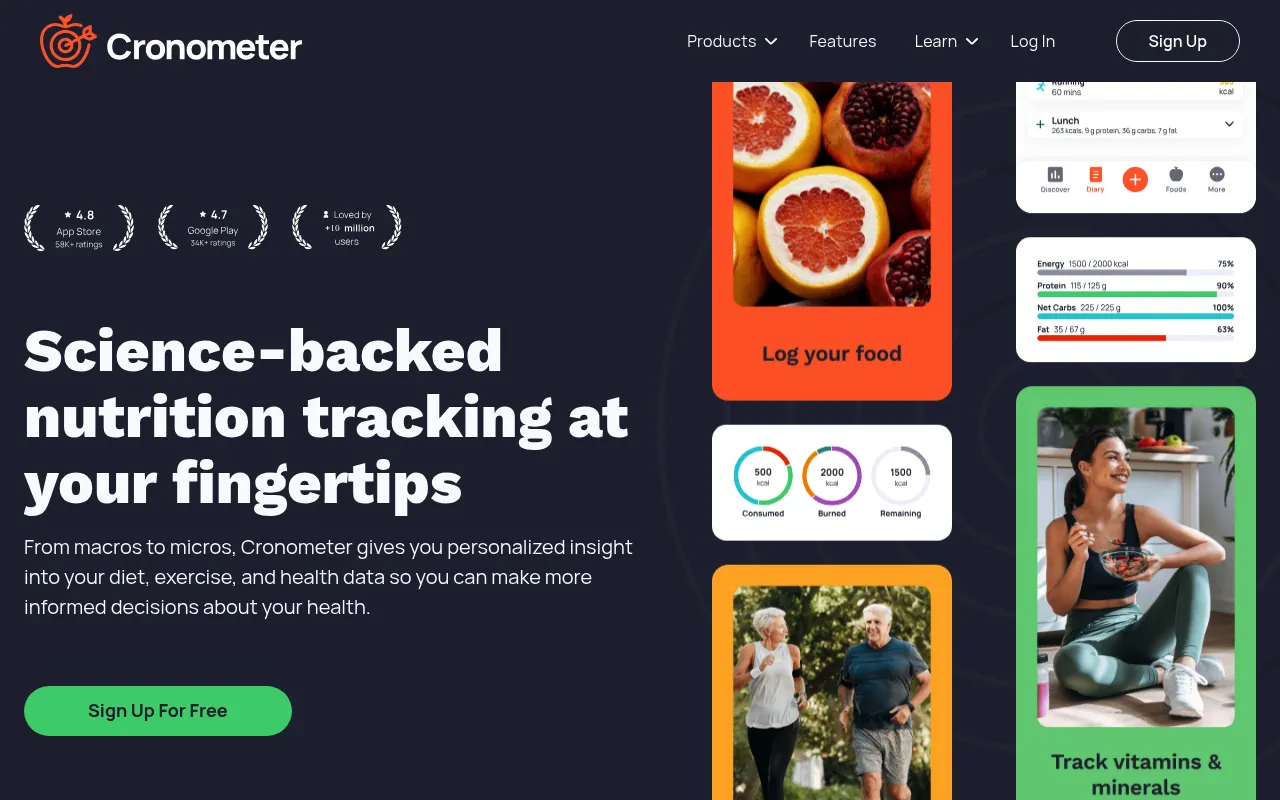
Cronometer's homepage emphasizes data accuracy and micronutrient depth. Screenshot captured May 2026.
Tracking Features Compared
Both apps cover the tracking basics (calories, macros, barcode scanning), but they diverge on micronutrient depth, database integrity, and recipe import workflows. The differences matter more for some clients than others, so we'll flag which feature is decisive and which is a nice-to-have.
Food database size and integrity
MyFitnessPal claims roughly 14 million food entries, the largest catalog on the market. The catch: most entries are user-submitted, so duplicate listings, incorrect macros, and missing fields are normal. Search "chicken breast" and you'll get dozens of conflicting results with calorie counts ranging from 110 to 280 per 100g. Cronometer's database sits around 1.2 million entries, sourced mostly from NCCDB, USDA, and verified manufacturer data. Fewer choices, but the answers are consistent and trustworthy. For coaches recommending precise intakes, that consistency saves the "which entry is right?" guessing game.
Micronutrient tracking depth
Cronometer tracks 80+ nutrients per food: 18 vitamins, 14 minerals, 9 amino acids, omega-3/omega-6 ratios, plus electrolytes and sterols. Every logged meal displays the full nutrient panel automatically. MyFitnessPal tracks roughly 14 nutrients (mostly macros plus sodium, sugar, fiber, and a handful of minerals on Premium). If you coach clients with iron, vitamin D, or magnesium deficiencies, or work in clinical nutrition where vitamin K and B-vitamin intake matters, Cronometer is the only serious option. For basic macro tracking, both apps work fine.
Macro customization and target setting
Both apps let coaches and clients set custom protein, carb, and fat targets. MyFitnessPal offers percentage-based macros on the free tier and gram-based macros on Premium. Cronometer offers both from day one, plus individual targets for every micronutrient (you can tell a client to hit 18mg of iron and 600mcg of folate, and Cronometer tracks both daily). If your client's plan needs nutrient-level precision, only Cronometer scales to that depth.
Barcode scanning and recipe import
Both apps support barcode scanning and custom recipe creation. There's a 2024 catch on MyFitnessPal worth knowing: barcode scanning moved behind the Premium paywall. Free-tier MFP users can no longer scan packaged foods. Cronometer keeps barcode scanning free. On packaged food coverage MFP still wins (more brands logged thanks to its larger user base), but Cronometer's accuracy on the foods you do find is higher. Both apps offer recipe import via URL on their paid tiers.
UX, mobile, and ease of use
MyFitnessPal is more beginner-friendly. The onboarding is shorter, the dashboard prioritizes calories and macros at a glance, and the food search feels faster (more entries, more autocomplete hits). Cronometer's interface is information-dense, with the full nutrient panel always visible, which is overwhelming for casual users and ideal for detail-oriented ones. Cronometer's web app is also significantly stronger, MFP's web experience has lagged its mobile app for years.
What MyFitnessPal Looks Like in 2026
MyFitnessPal's homepage focuses on calorie counting, habit-building, and the size of its food database. The marketing message is simple: log fast, build streaks, see results. That positioning explains the design choices in the app, MFP prioritizes speed and simplicity over depth, which is why casual clients prefer it and detail-oriented coaches don't.
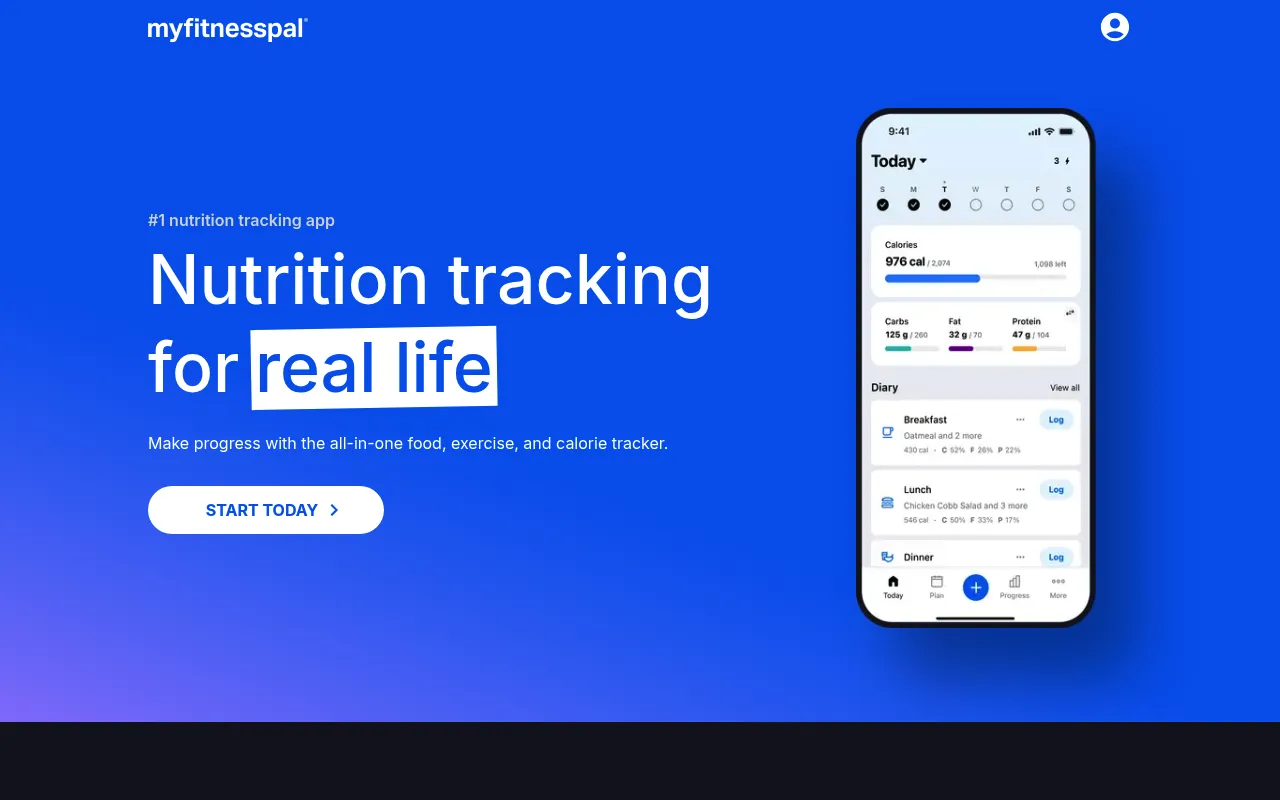
MyFitnessPal's marketing leans on database size and habit-building. Screenshot captured May 2026.
Which Is Cheaper, Cronometer or MyFitnessPal?
Cronometer is roughly a third the price of MyFitnessPal at the premium tier. Cronometer Gold runs about $5.99 to $8.99 per month (or $39.99 to $54.99 per year, prices shift periodically). MyFitnessPal Premium is $19.99 per month or $79.99 per year. Both have free tiers, but only Cronometer's free tier keeps barcode scanning and full micronutrient tracking, MyFitnessPal locks those behind Premium.
| Cronometer | MyFitnessPal | |
|---|---|---|
| Free | Full tracking + ads | Basic tracking + ads |
| Premium / Gold | $5.99/mo (or $39.99/yr) | $19.99/mo (or $79.99/yr) |
| Pro (coaches) | $35/mo (multi-client management) | No dedicated coach tier |
| Meal plan generation | Not included | Not included |
| White-label | No | No |
Cronometer Gold is roughly three times cheaper than MyFitnessPal Premium. If budget matters and you don't need MFP's larger packaged-food database, Cronometer offers better value, especially because the free tier covers more (barcode scanning, full micronutrients). For a broader look at professional tools, check our guide to the best meal planning software for coaches.

Cronometer's pricing page (Gold and Pro tiers). May 2026.
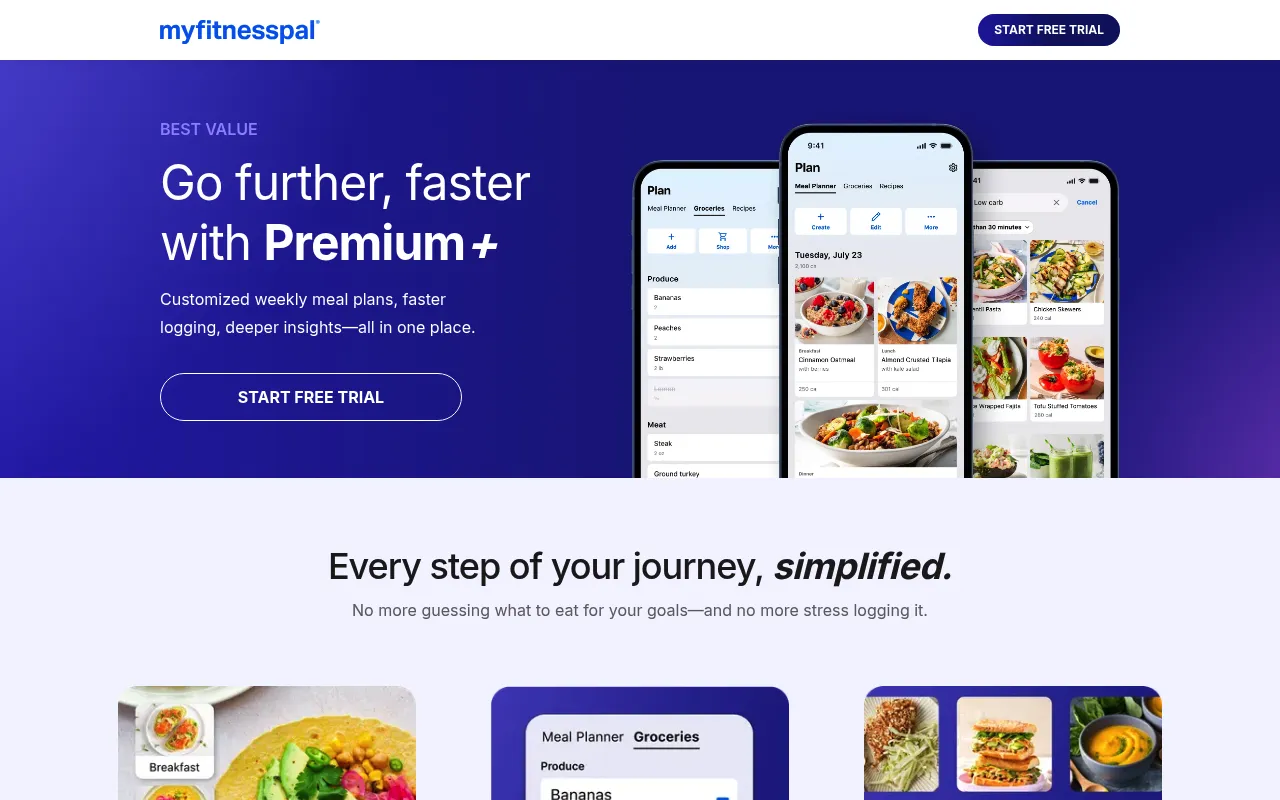
MyFitnessPal's Premium pricing page. May 2026.
Which Has the Better Free Tier?
Cronometer has the more usable free tier in 2026. It keeps barcode scanning, full micronutrient tracking, custom recipes (limited), and the full nutrient panel for every food. MyFitnessPal's free tier remains functional for basic calorie logging, but moved barcode scanning behind the Premium paywall in 2024, which was the feature most casual users relied on. If a client refuses to pay anything, Cronometer's free tier delivers more value.
| Free tier feature | Cronometer (free) | MyFitnessPal (free) |
|---|---|---|
| Barcode scanning | Yes | No (Premium since 2024) |
| Micronutrient panel | Full (80+) | Limited (~5) |
| Custom macro targets (grams) | Yes | Premium only |
| Custom recipe creation | Yes (limited) | Yes |
| Ad-free experience | No | No |
| Recipe import from URL | No | No |
Which Should You Recommend to Which Client?
Match the tool to the client, not the other way around. Cronometer fits clients who care about precision, micronutrient targets, or have specific deficiencies. MyFitnessPal fits clients building basic logging habits and who care more about social features than accuracy. Promealplan fits you, the coach, generating the plans your clients then track in either app.
Recommend Cronometer to
- - Physique athletes tracking precise macros and micros
- - Clients with documented deficiencies (iron, vitamin D, B12)
- - Biohackers and quantified-self enthusiasts
- - Clients on therapeutic diets (FODMAP, AIP, low-oxalate)
- - Budget-conscious clients (better free tier, cheaper paid tier)
Recommend MyFitnessPal to
- - Casual clients building their first logging habit
- - Clients who eat a lot of packaged or restaurant foods
- - Clients who care about social/community features and streaks
- - Clients already using the app (don't force a migration)
- - Clients who care about speed of logging over accuracy
Use Promealplan as the coach
- - Generate personalized meal plans for each client in minutes
- - Deliver white-labeled PDFs and a client portal with your branding
- - Work in English, French, or Spanish (recipes, portal, PDFs)
- - Pair with Cronometer or MyFitnessPal for client-side tracking
Can Coaches Use Either App for Client Meal Plans?
Neither app generates meal plans. They're tracking tools, designed to log what a person has already eaten, not to create what a client should eat next week. Cronometer Pro ($35/month) adds multi-client monitoring so a coach can review client food logs, but it still doesn't generate plans. If you need to create, brand, and deliver plans to clients, you need a dedicated meal planning tool. Tracking and meal planning are two separate steps in the coaching workflow.
Features missing from both apps
- - Generate personalized meal plans (macros, allergies, preferences)
- - Deliver white-labeled plans with your branding
- - Manage multiple clients from a coach dashboard
- - Offer a branded client portal
- - Export professional PDFs with grocery lists
- - Work in multiple languages (French, Spanish)
That's not a flaw. It's simply not what they were built for. Cronometer and MyFitnessPal were designed for individuals tracking their own food. Not for professionals creating and delivering meal plans to clients.
Try creating a meal plan instead of just tracking one. Promealplan generates personalized meal plans for your clients in minutes. 1,000+ recipes, white-label, 3 languages. Free trial, 3 plans, no credit card.
Try Promealplan free →How Promealplan Fits Alongside Either Tracker
Promealplan generates the plans, Cronometer or MyFitnessPal tracks adherence. You build a personalized weekly meal plan in Promealplan (macros, allergies, preferences, recipes), deliver it to your client with your branding, and they log the meals they actually eat in their tracker of choice. All three tools coexist cleanly in one coaching workflow.
Automatic meal plan generation
Set each client's macro targets, allergies, and food preferences. The algorithm generates a complete meal plan with recipes, portions, and a grocery list. Over 1,000 recipes validated by registered dietitians, not user-submitted entries.
White-label on every deliverable
PDFs and the client portal carry your branding. Your clients see your identity, not a third-party software logo. Neither Cronometer nor MyFitnessPal offers this.
Three languages, one tool
Recipes, client portal, grocery lists, and PDFs in English, French, and Spanish. Both tracking apps are English-only. If you serve clients outside the US, that's a dealbreaker.
For more detail, read our full Cronometer review and our meal plan template guide for coaches.
Complete Comparison Table
| Feature | Cronometer | MyFitnessPal | Promealplan |
|---|---|---|---|
| Tool type | Food tracker | Food tracker | Meal plan creator |
| Target audience | Health-conscious individuals | General consumers | Coaches, dietitians, gyms |
| Food database | 800K+ verified | 14M+ user-submitted | 1,000+ dietitian-crafted recipes |
| Micronutrients | 80+ | ~10 | No |
| Data accuracy | High (NCCDB, USDA) | Variable (user contributions) | High (dietitian-verified) |
| Barcode scanning | Yes | Yes | No (not a tracking tool) |
| Meal plan generation | No | No | Yes, automatic |
| White-label | No | No | Yes, full branding |
| Client portal | No | No | Yes, your branding |
| Mobile app | iOS + Android | iOS + Android | Mobile web portal |
| Languages | English | English (+ partial) | English, French, Spanish |
| Free tier | Yes (with ads) | Yes (with ads) | Yes (3 plans, no card) |
| Premium price | $5.99/mo | $19.99/mo | $49/mo (Lite) |
| Trustpilot | 4.2 stars | 1.8 stars | 4.5 stars |
Frequently Asked Questions
Is Cronometer more accurate than MyFitnessPal?
Yes. In published 30-item accuracy tests against USDA reference values, Cronometer hits 30 of 30 within 5%, while MyFitnessPal hits 11 of 30. Cronometer sources its ~1.2 million entries from NCCDB, USDA, and manufacturer-verified data, tracking 80+ micronutrients per food. MyFitnessPal's 14 million entries are mostly user-submitted, so duplicates and inaccurate data are common.
Which is better for tracking macros, Cronometer or MyFitnessPal?
Both track macros well. MyFitnessPal offers percentage-based macros on free and gram-based on Premium. Cronometer provides both from day one, plus individual targets for 80+ micronutrients. For basic macro tracking, they're comparable. For detailed micronutrient tracking (iron, vitamin D, B-vitamins), Cronometer is far ahead.
Can coaches use Cronometer or MyFitnessPal for client meal plans?
Neither app generates meal plans. They track what people eat, but they don't create plans. Cronometer Pro ($35/month) adds multi-client management for monitoring food logs. But if you need to generate, brand, and deliver meal plans to clients, you need a dedicated meal planning tool like Promealplan.
Which has the better free tier in 2026?
Cronometer. Its free tier keeps barcode scanning, full 80+ micronutrient tracking, gram-based macro targets, and custom recipes. MyFitnessPal's free tier moved barcode scanning behind the Premium paywall in 2024, locking the feature most casual users relied on. For a client who refuses to pay, Cronometer free delivers more functionality.
Can I use Cronometer or MyFitnessPal with Promealplan?
Yes, they're complementary tools. Promealplan generates the meal plans you deliver to clients. Your clients can then use Cronometer or MyFitnessPal to track how closely they follow the plan. Promealplan creates plans; tracking apps measure adherence.
Ready to Move From Tracking to Creating?
Promealplan generates personalized meal plans for your clients. White-label, 1,000+ recipes, 3 languages. Start your free trial, no credit card needed.
Start FreeRelated Articles
Cronometer Review 2026: Precision Nutrition Tracking for Coaches
Features, pricing, pros, cons, and whether it works for coaching businesses.
Best Meal Planning Software for Coaches (2026)
Compare professional meal planning tools side by side.
How to Calculate Macros for Clients
Practical guide to setting macro targets for each client.
Meal Plan Template for Coaches
Free templates and tips for structuring professional meal plans.